
In the empathy lab
“The Lab was excellent, the practical tasks and simulators really conveyed the difficulties people face.
The team is still talking about it and identifying changes to our work and documents.”
Adam C, Information Manager
The empathy lab experience is a practical hands-on workshop. Attendees take part in a range of activities at ten different ‘stations’. Through carefully designed activities they undertake a series of day-to-day practical tasks. The tasks include interpreting charts and diagrams, finding information on a mobile phone, opening locks and planning a meeting or event.
This gives participants a deep insight into the barriers faced by people when products and services have not been designed with accessibility in mind.
Attendees are encouraged to identify actions that they can take to reduce the barriers experienced by people in their own contexts and environments.
Read more about our empathy lab workshops.
What’s in the lab - physical and digital simulations
-

Visual impairment simulators (by Visual Impairment North East)
The visual impairment simulators are glasses which give a sense of the changes to a person’s vision if they have conditions such as macular degeneration, cataracts or tunnel vision. In the lab we explore some simple design considerations that help reduce the barriers for people with low or impaired vision.
-

Mobility and dexterity simulators (Cambridge inclusive design toolkit)
We use gloves with strips of plastic that reduce the range of movement in your fingers and thumbs, weighted vests and joint braces to give a sense of the challenges faced by people with reduced mobility and dexterity. This gives incredible insight into the design of services and spaces. We explore the principles of good services.
-

Colour blindness, dyslexia and hearing impairmentsimulators
The colour-blindness, dyslexia and hearing impairment simulators run on a laptop, table or phone. They help us consider the accessibility of content and signage. We look at how to make accessible charts and graphs, and consider the importance of well structured, jargon-free content. We also discuss the role of screen readers.
Other learning activities
-
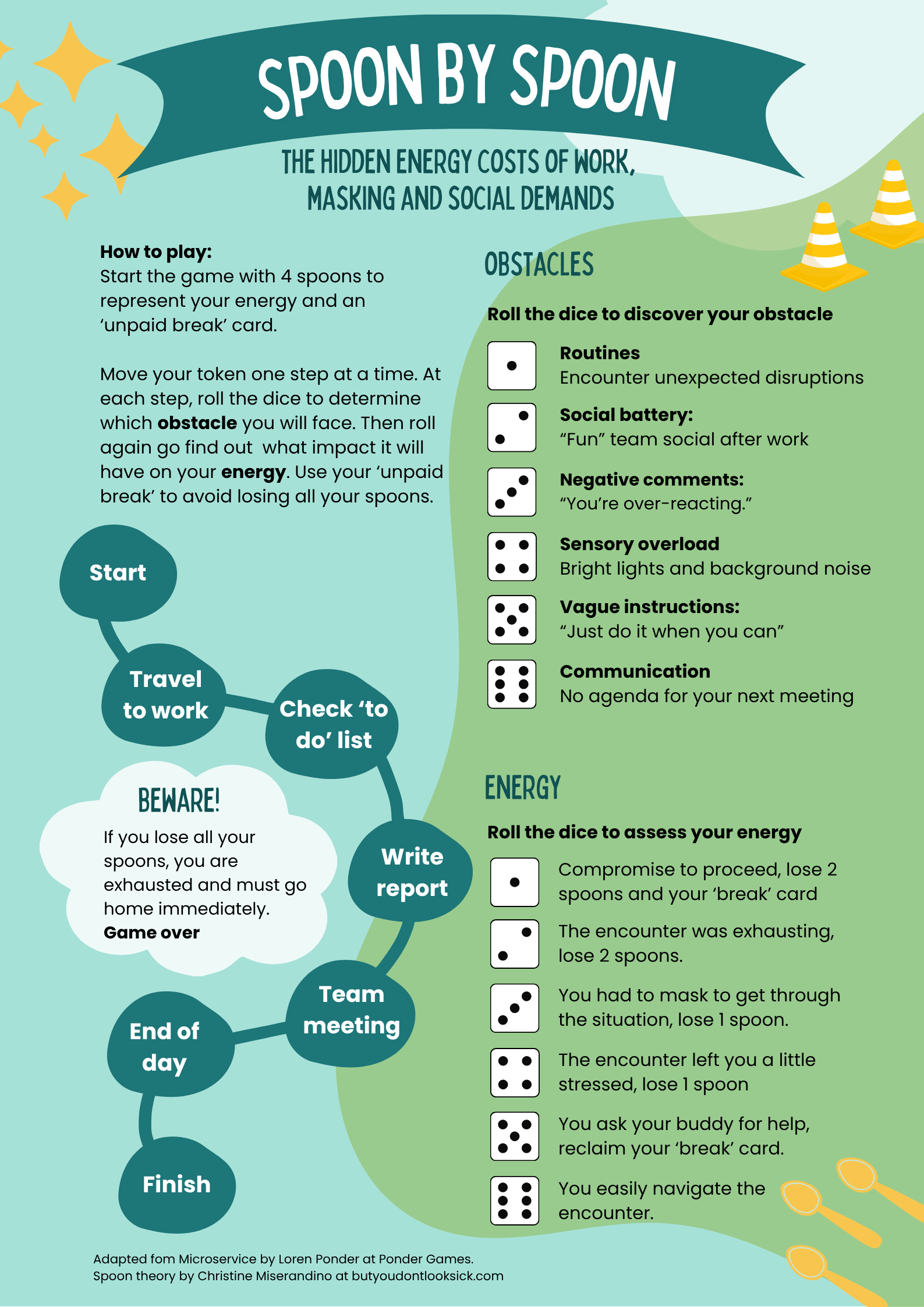
Spoon theory, chronic illness and masking
Using board games and card games gives participants another way to learn about disability. In the board game, players must complete a set of daily tasks while maintaining their energy levels (represented by spoons). In the card game, players match ‘meeting tips and strategies’ to the ‘Neurodivergent traits and characteristics’ that they would most positively support.
-
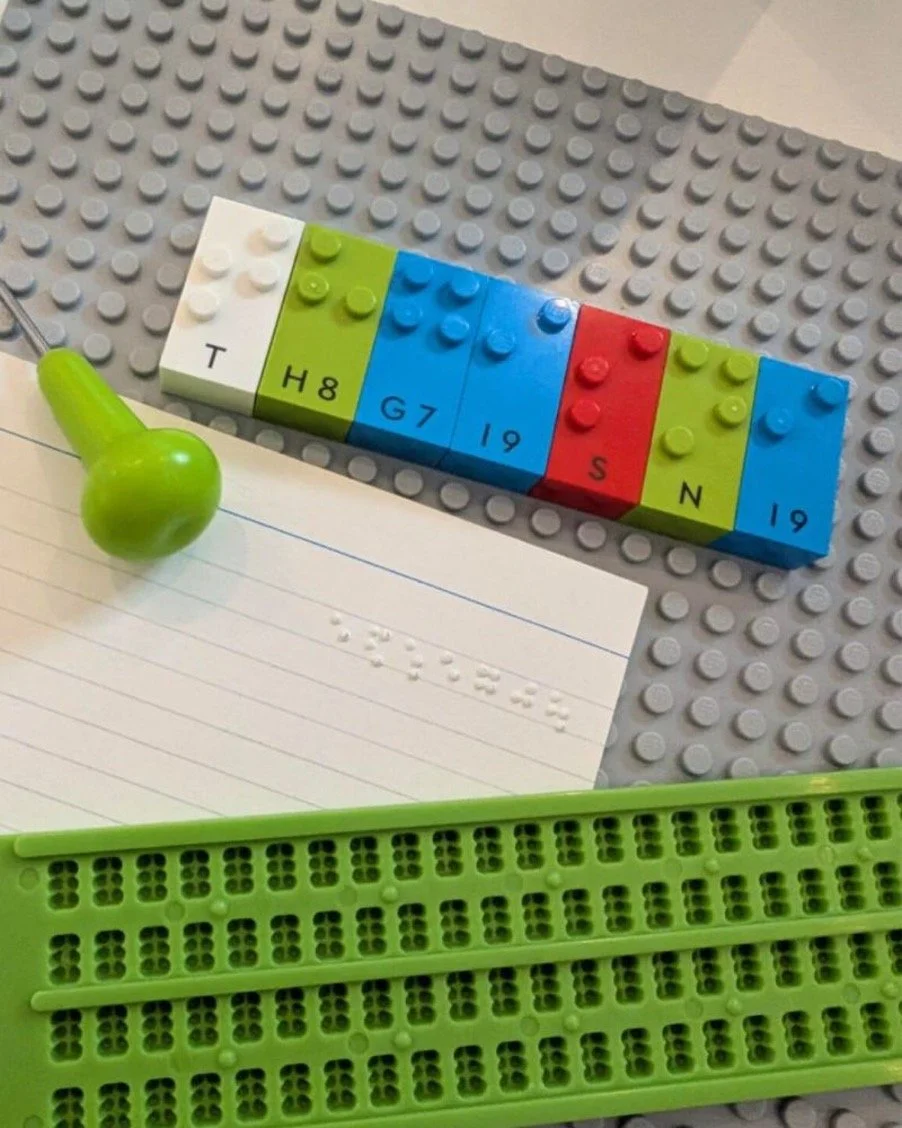
Braille, tactile maps and hearing impairment
Participants learn about Braille and try their hand at writing their name in Braille. They also explore how Braille is integrated into products and services, and think about what that means in terms of inclusion. A highlight is always when they explore high street product catalogues written entirely in Braille.
-
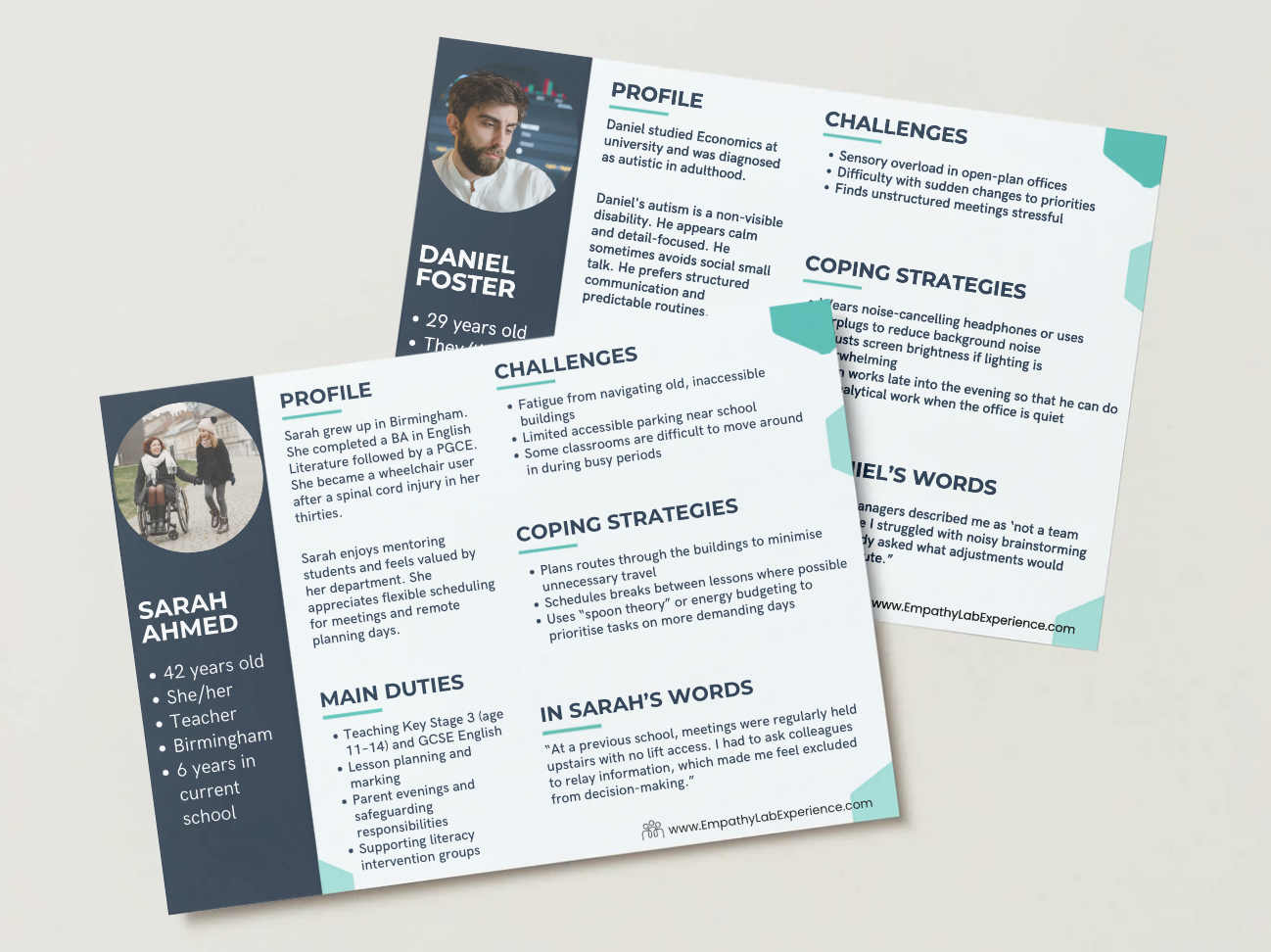
Lived experience
Throughout the Empathy Lab we maximise attendees’ understanding of the experience of people with disabilities and impairments. We use profiles against which attendees can explore the impact of workplace adjustments, share narratives from disabled people explaining what they wish others understood, and can also include live ‘experience clinics’ where participants can ask questions directly.